- London Experiences
- London-on-Sea
- Outside the M25
- Food & Drink Gifts
- Gifts for Couples
- Gifts for Him
- Gifts for Her
- Birthday Gifts
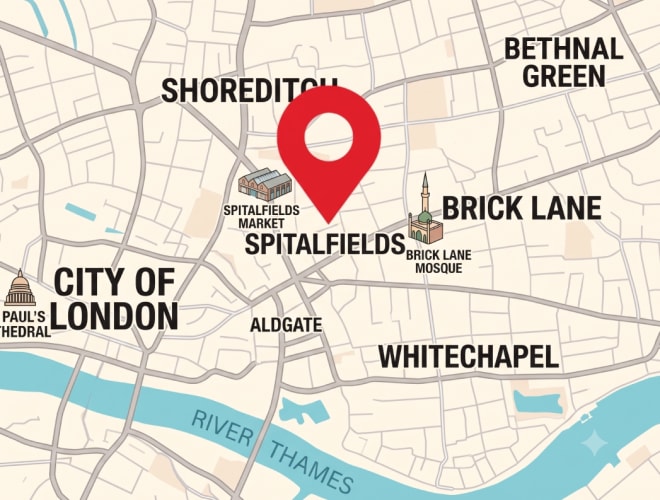
Some parts of London change.
Spitalfields and Brick Lane practically specialise in it.
For centuries people have arrived here from somewhere else, bringing new food, new ideas, new businesses and new ways of seeing the world. The result is one of London's most fascinating neighbourhoods, where Georgian townhouses sit beside street art, vintage markets spill onto historic streets and some of the city's best food can be found within a few minutes' walk.
Come hungry.
Leave inspired.
The answer is surprisingly simple.
In the 15th century, brick and tile makers worked in this part of East London, supplying materials to a rapidly expanding city. Their kilns lined the road, eventually giving Brick Lane its name.
Not the most exciting origin story.
What happened next is far more interesting.

Over the centuries, successive waves of newcomers made this neighbourhood their home.
French Huguenots arrived first, followed by Irish communities, Eastern European Jewish families and later the Bangladeshi community that helped shape the Brick Lane we know today.
Walk down one street and you're effectively walking through 300 years of London's immigration story.

Today the area continues to evolve.
Independent coffee shops occupy former workshops. Creative studios sit beside historic curry houses. Vintage traders, artists and entrepreneurs have all added new layers to the neighbourhood.
The buildings may be old.
The energy feels remarkably current.

Long before the murals appeared, Spitalfields was famous for silk.
In the 17th century French Huguenot weavers transformed the area into one of Britain's most important textile districts. Many of the elegant Georgian houses still standing today were built for wealthy silk merchants.
Fast forward a few centuries and the creativity remains, just in a different form.
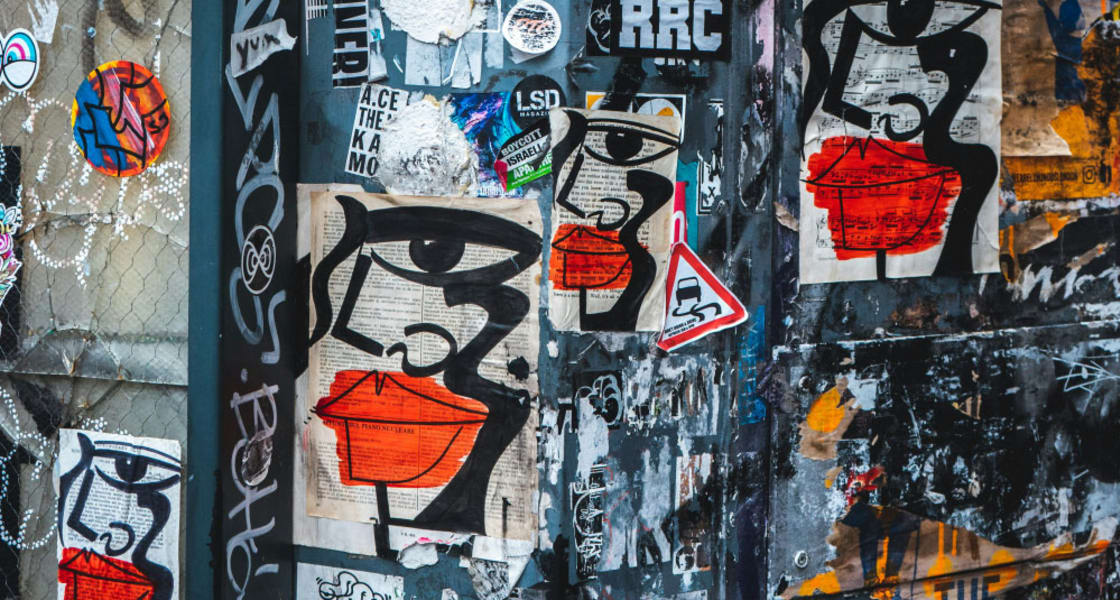
Today the walls have become the canvas.
Large-scale murals, hidden artworks and ever-changing pieces by local and international artists have turned the streets into one of London's most photographed outdoor galleries.
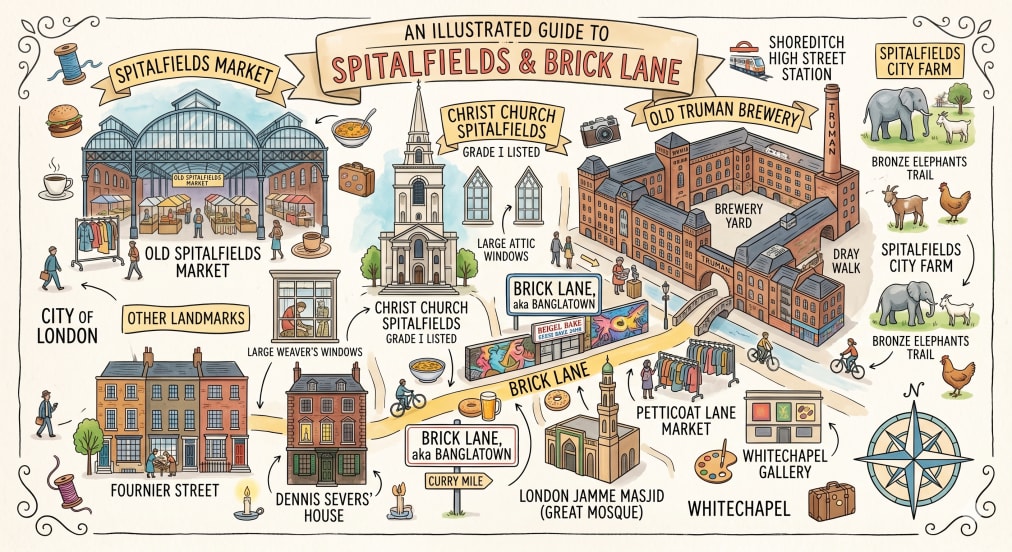
Come here if you like…


Part market, part food destination, part people-watching paradise.

The area's famous spine, lined with curry houses, cafés, vintage stores and constantly changing street art.
One of London's most striking churches, designed by Nicholas Hawksmoor.
Once one of London's largest breweries, now a creative hub filled with events, shops and independent businesses.

Perhaps London's strangest museum experience.

Beautiful reminders of the area's silk-weaving past.

A Brick Lane institution

Subtle traces of the Jewish East End still remain throughout the area.
Of course. In fact, it's one of the easiest parts of London to fall for. Within a few streets you'll find centuries of history, world-famous street art, incredible food, independent shops, vintage treasures and some of the best people-watching in the city. It's a neighbourhood that rewards wandering. Turn down the right alleyway and you might find a hidden gallery, a Georgian townhouse, a curry house that's been there for decades or a mural that wasn't there last week. Come with a plan if you like. Just don't be surprised if you abandon it.
Reinvention. For centuries this corner of East London has welcomed new arrivals, each leaving their mark on the area. French silk weavers, Jewish traders, Bangladeshi restaurateurs, artists, makers and entrepreneurs have all helped shape the neighbourhood. Today it's famous for street art, markets, food, vintage shopping and a creative energy that never seems to sit still for very long.
Very. The beauty of the area is that it gives you plenty to discover together. You can spend an afternoon browsing markets, hunting down street art, sharing incredible food and stumbling across hidden bars without ever feeling like you're ticking off tourist attractions. The best dates here usually start with one idea and end somewhere completely unexpected.
Start by looking beyond the obvious. Most people know the market and the curry houses, but the area is full of surprises. Step inside Dennis Severs' House and you'll feel like you've walked into another century. Explore the side streets and you'll discover hidden galleries, forgotten alleyways, secret cocktail bars and traces of every community that's called the area home. Curiosity tends to be rewarded around here.